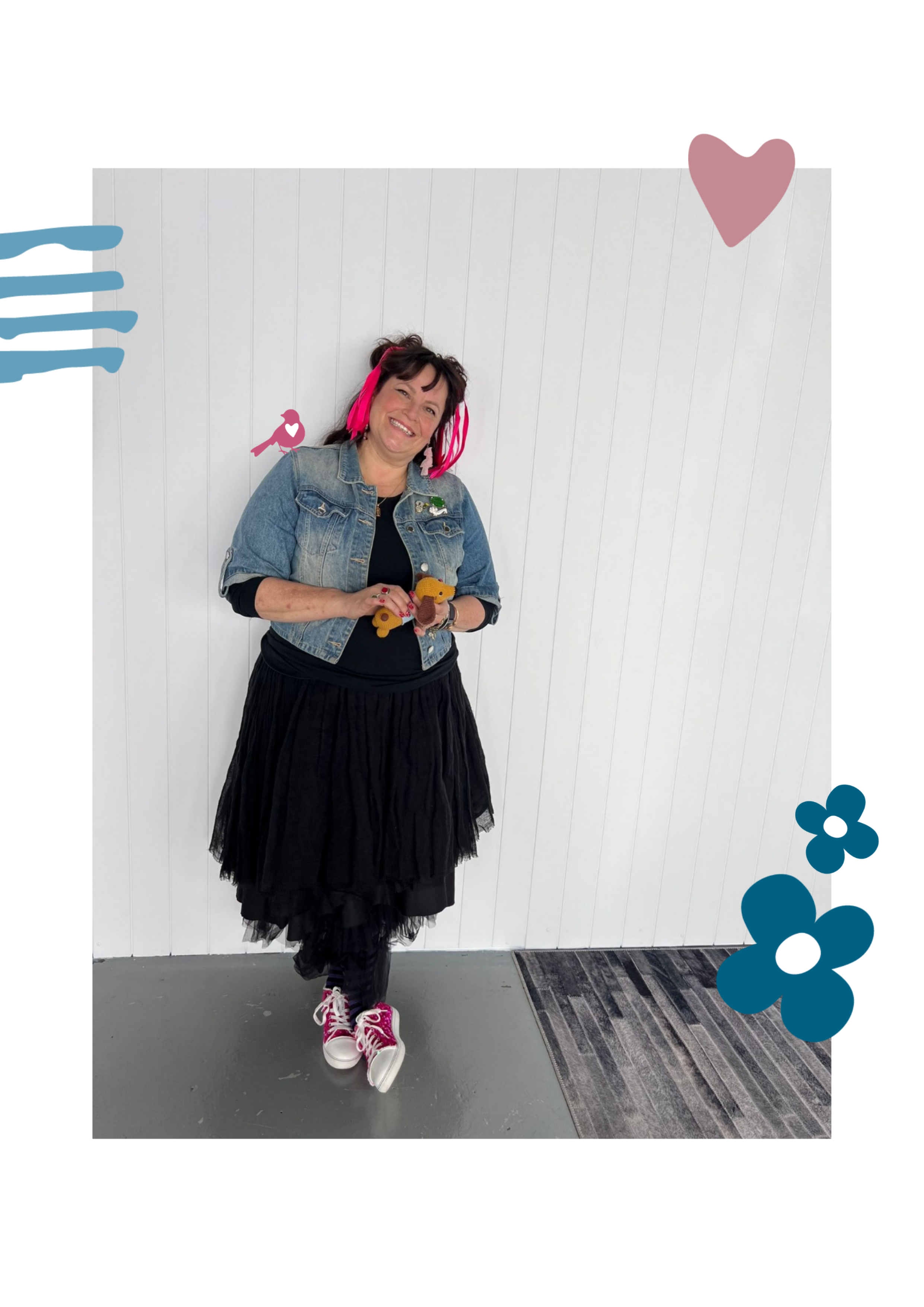
The ADHD tax is real. I have three Apple Pencils to prove it.
Hiya,
I was billed for Dropbox this week.
I haven't used Dropbox in three years.
This is, for the record, the third time this has happened.
The ADHD tax is real. And I am not immune to it. Not even close.

If you haven't heard the term,ADHD tax is the extra cost we pay — in money, time, energy, and about a thousand other ways — because of how our brains work.
Today we're talking about the money tax. One of the most popular among the sparkly brained. It's not carelessness. It's not being bad with money.It's impulse control, time blindness, object permanence, and a graveyard of good intentions adding up to real dollars leaving your account every single month.
Let me start with my Apple Pencils.
I have three. One first generation, two second generation. At today's prices, that's nearly $600 sitting in a drawer doing absolutely nothing.
Here's how it happened.
Lost the first one. Decided it was a good time to upgrade to second generation anyway. Used it for a few months, loved it, lost it. Bought another one because I needed it and I needed it now. A year later I cleared out my doom cupboard* and found both missing ones sitting there, quietly judging me.
I now have all three. I use none of them. Because somewhere along the way I got bored with my iPad and realised I just prefer pen and paper.
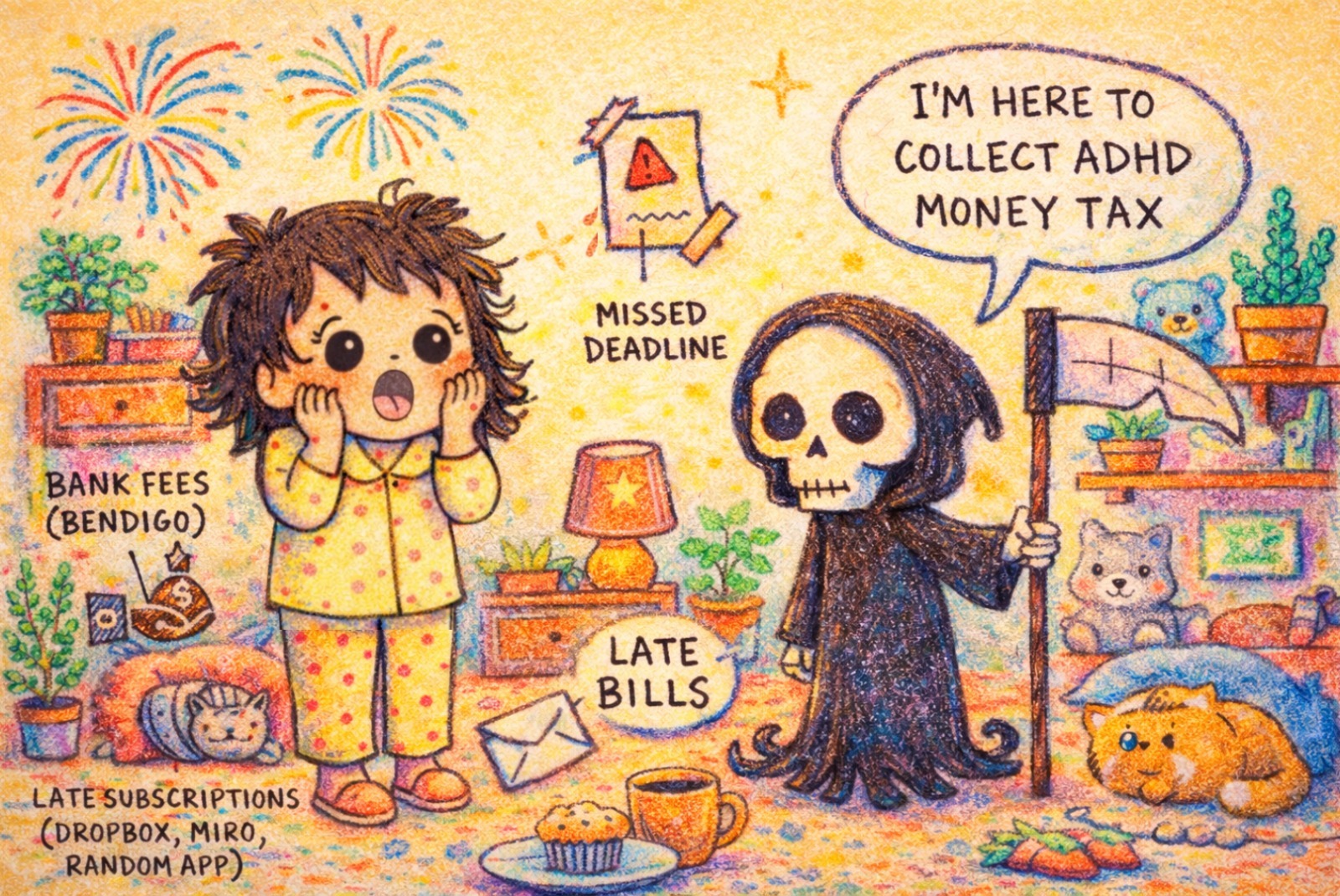
This is the full ADHD tax cycle in one story.
Get excited about something new. Impulse control says yes before the logical brain has a chance to weigh in. Use it enthusiastically for a while. Lose interest, or lose the actual thing, or both. Buy another one. Find the original in the doom cupboard. Repeat.
The hack: find a home for the thing and make it so dopamine heavy you actually want to put it back there. I'm talking a glittery holder. Extra gems. A caterpillar outfit for your pencil. Whatever makes your brain light up when it sees it. If returning it feels like a reward rather than a chore, it stands a fighting chance of actually happening.
Then there's the subscription graveyard.
Mine includes Dropbox, obviously. Miro for mind mapping that I was absolutely going to use. Some app for writing notes on my iPad that I cannot even remember the name of now. A flashcard app for psychology I paid for four years after I finished uni. Perplexity, long after I'd stopped using it for research. And more. So many more.
Subscriptions are perfectly designed to exploit exactly how our brains work. We sign up in a moment of genuine enthusiasm. We use it, love it, then quietly stop. Out of sight, out of mind. And then it just… keeps billing. Every month. Or worse, every year. Because we thought the annual plan was better value.
The hack: pay monthly. Yes, it costs more per month. But for a brain like ours, monthly is actually cheaper. The annual plan moves the subscription out of your eyeline for twelve months and by the time it comes back around — hello Dropbox — you haven't used it in three years. Monthly keeps it visible. If you're still using it after three months, it's earned its place. If you're not, you cancel it before it becomes a three year Dropbox situation. We effectively prepay the ADHD tax with the monthly fee. It still ends up costing us less.
And then there are late fees.
I work in the money space. I know better. And I am an olympic level late fee payer. Bendigo Bank loves me.
Here's the thing. I used to have my credit card payment set up as an automatic sweep. Then I moved to Melbourne a couple of years ago and changed banks. Never set up the new automatic payment. Have been manually paying ever since — except when I forget. Which is often. And Bendigo Bank quietly collects the late fee every time.
The cruel part? Setting up the automatic payment would take ten minutes. One trip into Bendigo Bank. Done.
It still hasn't happened. Because that trip requiresspoons**I don't always have, and somehow there is always something more urgent to do, or I get distracted.

The hack:body doubling.***Drag someone with you. To Bendigo Bank, to your desk, to wherever the thing needs to happen. And then automate everything you possibly can. Direct debits, automatic sweeps, scheduled payments. Remove the task from your plate entirely so your brain never has to remember it again. The goal is to do it once, set it up properly, and never pay that late fee again.
Cool bananas. Three Apple Pencils, Dropbox for the third time, and a late fee that could have been a direct debit.
We are all in this together.
And knowing the pattern is the first step to making it cost a little less.
Start with your subscriptions. Go look right now. I'll wait.
More to come on the ADHD tax next week, where we talk about one of the biggest ones — the time tax.
Mel x
*Doom cupboard:the place where everything goes when you need it gone. Perfectly organised chaos. You'll find the thing you lost, the thing you forgot you had, and at least one candle. Mine also had a cardigan I'd been looking for since last winter.
**Spoon theory:the idea that we start each day with a limited number of spoons — units of energy and capacity. Every task costs one. Some days you have a full drawer. Some days you've got two left and going into Bendigo Bank is absolutely not getting one of them.
***Body doubling:the magic of having another human in the room while you do the thing you've been avoiding. They don't have to help. They don't even have to be paying attention. Something about not being alone with the task makes the task actually happen. A coffee shop works. A friend on a video call works. Dragging someone to Bendigo Bank with you absolutely works.
ADHD Village- PO Box 475, Clifton Hill, 3068, Australia