Can we talk about
something?
You are brilliant at what you do. Your clients get results. Your peers respect you.
You built your business on time away from your family, stress and taking on risk.
And you are working all the time and not where you want to be.
You probably know what you need to do. You just can't make yourself do it.
And you don't know why it has to be this hard.
If that's landing — you're in the right place.
If you’ve ever sat in a room — whether at a networking event, business coaching session,or GP appointment — and felt like you were performing a version of yourself that had very little to do with who you actually are, you’re in the right place.

What you’ve been carrying has a name. For some of you, that name is already confirmed. For others, you're only just starting to wonder if this is what's been true all along.
Either way — if this sounds like you, it's probably meant for you.
You've spent a long time being the version of yourself other people need. You've been doing it so long you've forgotten what it costs you.
You know that feeling when you want to flip a table?
When someone says something so reductive, so casually wrong,
that your whole nervous system feels fried
And yet, you smile and nod anyway because what else do you do?
You don't have to keep doing that. It has cost you enough already.
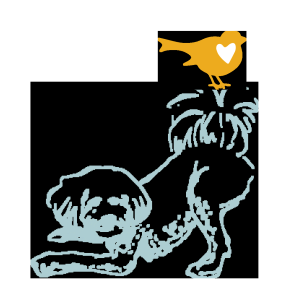
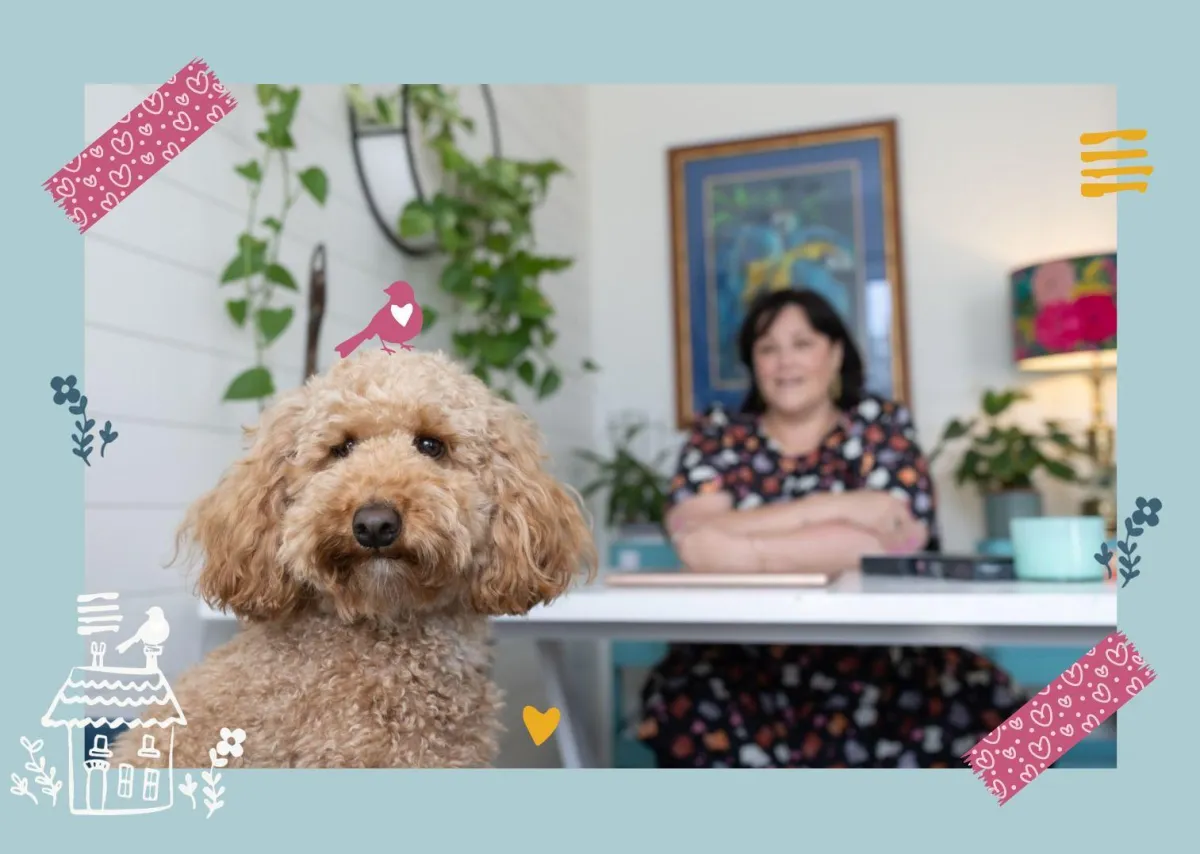
Meet Louie, my side kick
Can we talk about
something?
You are brilliant at what you do. Your clients get results.
Your peers respect you.
You built your business on time away from your family,
stress and taking on risk.
And you are working
all the time and
not where you want to be.
You probably know
what you need to do.
You just can't make yourself do it.
And you don't know
why it has to be this hard.
If that's landing —
you're in the right place.
If you’ve ever sat in a room — whether at a networking event, business coaching session,or GP appointment — and felt like you were performing a version of yourself that had very little to do with who you actually are, you’re in the right place.

What you’ve been carrying has a name. For some of you, that name is already confirmed. For others, you're only just starting to wonder if this is what's been true all along.
Either way — if this sounds like you, it's probably meant for you.
You've spent a long time being the version of yourself other people need. You've been doing it so long you've forgotten what it costs you.
You know that feeling when you want to flip a table?
When someone says something so reductive, so casually wrong,
that your whole nervous system feels fried
And yet, you smile and nod anyway because what else do you do?
You don't have to keep doing that. It has cost you enough already.
Meet Louie, my side kick
Hiya. I'm Mel.
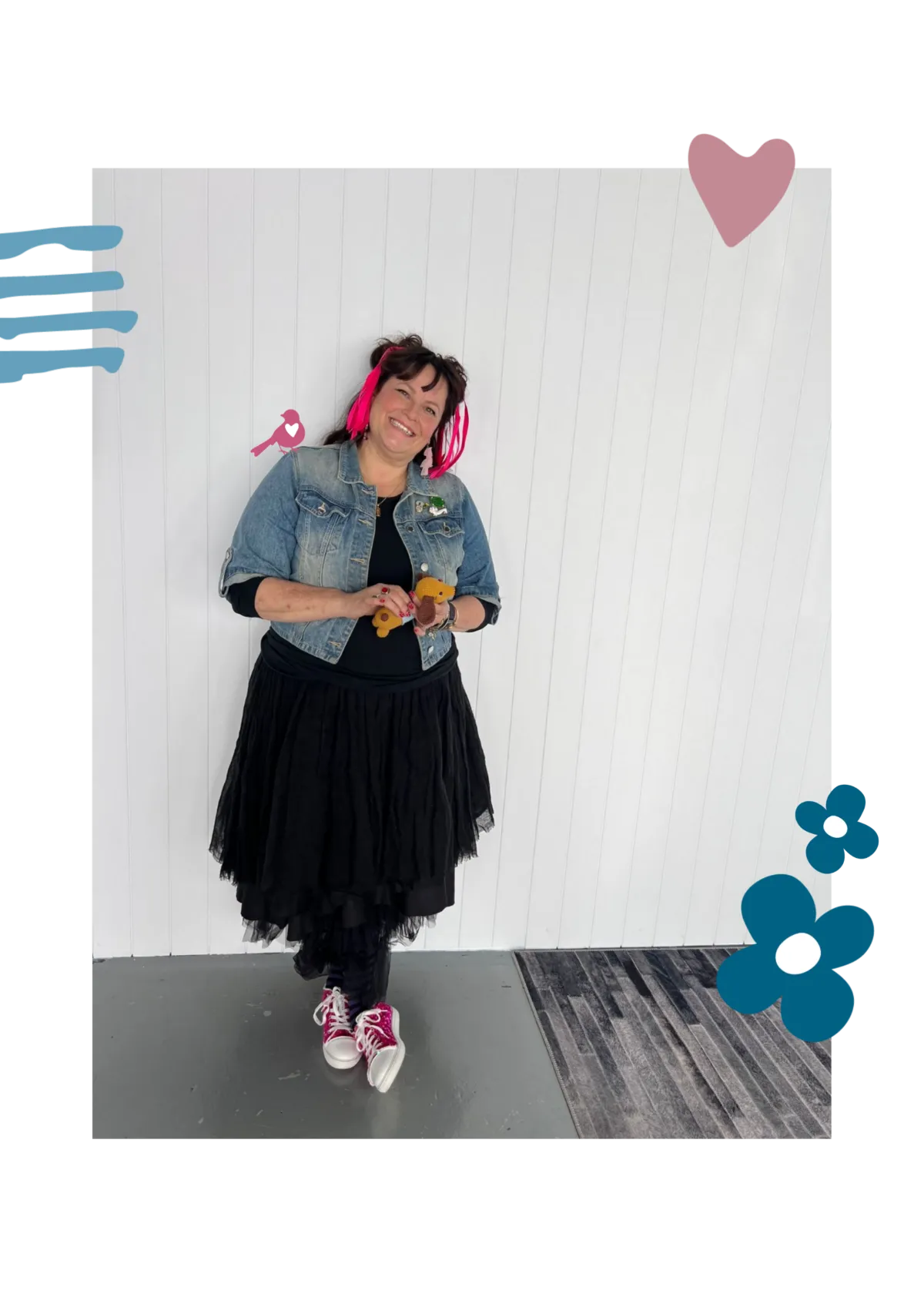
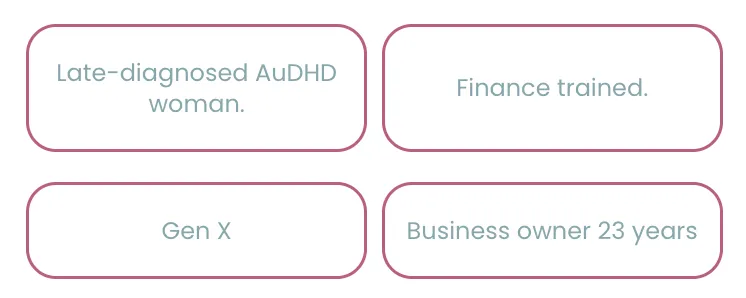
Late-diagnosed AuDHD woman.
Finance trained.
Gen X
Business owner 23 years
Masking is exhausting when you don’t even know you’re doing it.
Twenty years in corporate — finance, management, accounting, oil and gas, across Texas, Norway, Jakarta, Singapore, New Zealand and Australia.
I was a high performer who collected awards and kept on keeping on during particularly stressful points, like when nine others in my team were made redundant.
What nobody told me was that the anxiety that was eating me alive had a name – but I wouldn’t learn this for decades. Instead, I was diagnosed with depression and chronic anxiety.
I bit my nails. I bit the insides of my mouth. I cried — constantly, and always privately — because that was the only version of falling apart that was safe for me to do in the workplace.
I wasn’t masking because I didn’t know that word yet. I was just doing what my nervous system had learned to do so I could survive in rooms that were never built for me, exhausted in ways I couldn’t explain.
Hiya, I'm Mel.
Masking is exhausting when you don’t even know you’re doing it.
Twenty years in corporate — finance, management, accounting, oil and gas, across Texas, Norway, Jakarta, Singapore, New Zealand and Australia.
I was a high performer who collected awards and kept on keeping on during particularly stressful points, like when nine others in my team were made redundant.
What nobody told me was that the anxiety that was eating me alive had a name – but I wouldn’t learn this for decades. Instead, I was diagnosed with depression and chronic anxiety.
I bit my nails. I bit the insides of my mouth. I cried — constantly, and always privately — because that was the only version of falling apart that was safe for me to do in the workplace.
I wasn’t masking because I didn’t know that word yet. I was just doing what my nervous system had learned to do so I could survive in rooms that were never built for me, exhausted in ways I couldn’t explain.
Starting our own business
“I’ve quit my job. Let’s start a recruitment business.”
My husband Simon said this to me while I was pregnant with our third child.
I felt fear, followed by — how do we do this?
So I figured it out. Messily. Quickly. Probably out of order.
That’s probably the most ADHD thing I’ve ever done. No lengthy deliberation. No five-year plan. Just yes, and — let’s go.
Almost immediately, without fully understanding why, I started doing things differently to everyone else I knew in business.
I painted an entire wall which was five metres wide and two metres tall. Outlined it, sealed it, turned it into a chalkboard. I had different colours for each client — with sticky notes and manila folders all colour-matched – this was back in the paper-heavy days when nobody was talking about visual systems or executive function scaffolding.
I just knew my brain needed to see everything at once, so I built it that way.
When we grew and hired staff, I asked each of them how they wanted to be communicated with. One liked acknowledgement through small gifts. One liked handwritten notes. One wanted to be left alone to do her job brilliantly and trusted to get on with it.
I didn’t have a framework for this, I just knew that people weren’t the same, and that pretending otherwise was a waste of everyone’s talent.
As the business grew — a team of fifteen at our peak, with multi-millions in sales over the years — I was working harder and harder just to hold it all together.
And honestly? The recruitment industries, with its numerous interviews and shortlisting was beginning to tire me.
The success was exposing the cracks because the bigger things became, the more I needed support. And the coaches I sought out couldn’t
quite see me as I am.
Not because they weren’t skilled coaches, but because they were coaching a neurotypical operating system when I had a completely different one.
I just didn’t know that yet –so instead I beat myself up for not being able to follow through on the five-year strategic plan. For not being able to chunk things into neat silos. For the way my brain refused to work the way the business books said that it should.
I didn’t have the language for that yet, but I was starting to feel the shape of it.
I was white-knuckling success. That's what it was. For decades.
Starting our own business
“I’ve quit my job. Let’s start a recruitment business.”
My husband Simon said this to me while I was pregnant with our third child.
I felt fear, followed by — how do we do this?
So I figured it out. Messily. Quickly. Probably out of order.
That’s probably the most ADHD thing I’ve ever done. No lengthy deliberation. No five-year plan. Just yes, and — let’s go.
Almost immediately, without fully understanding why, I started doing things differently to everyone else I knew in business.
I painted an entire wall which was five metres wide and two metres tall. Outlined it, sealed it, turned it into a chalkboard. I had different colours for each client — with sticky notes and manila folders all colour-matched – this was back in the paper-heavy days when nobody was talking about visual systems or executive function scaffolding.
I just knew my brain needed to see everything at once, so I built it that way.
When we grew and hired staff, I asked each of them how they wanted to be communicated with. One liked acknowledgement through small gifts. One liked handwritten notes. One wanted to be left alone to do her job brilliantly and trusted to get on with it.
I didn’t have a framework for this, I just knew that people weren’t the same, and that pretending otherwise was a waste of everyone’s talent.
As the business grew — a team of fifteen at our peak, with multi-millions in sales over the years — I was working harder and harder just to hold it all together.
And honestly? The recruitment industries, with its numerous interviews and shortlisting was beginning to tire me.
The success was exposing the cracks because the bigger things became, the more I needed support. And the coaches I sought out couldn’t
quite see me as I am.
Not because they weren’t skilled coaches, but because they were coaching a neurotypical operating system when I had a completely different one.
I just didn’t know that yet –so instead I beat myself up for not being able to follow through on the five-year strategic plan. For not being able to chunk things into neat silos. For the way my brain refused to work the way the business books said that it should.
I didn’t have the language for that yet, but I was starting to feel the shape of it.
I was white-knuckling success. That's what it was. For decades.
I stayed for four years waiting to be invited for coffee.
When my daughter Meg started kindy, I was working 50-hour weeks and struggling to connect with the other mums. So I did what my brain has always done when it wants to belong — I overcompensated.
I joined the school committee. And not just that — I put my hand up for Treasurer.
More unseen, unwanted work, which had me staying up late doing the job I’d volunteered for because I thought it would make people like me.
That’s the ADHD tax: you pay it in hours, sleep, and the quiet hope that this time your efforts will finally be enough to grant you acceptable.
My desk is immaculate but my drawer is a crime scene.
My desk at work was always immaculate, with the top completely clear.
What nobody saw was my doom drawer: the filing I’d promised myself I’d do, seventeen pens — because I could never find one when I actually needed it, notes of passwords that absolutely should not be written down, but my memory… These are the things I said I’d deal with later, as they collected quietly in the dark.
I didn’t show even my closest friends or colleagues who I actually was, in case they didn’t accept me.
I didn’t lose myself. I just hid and overcompensated, but what was underneath was always worth finding.
Plot twist: my diagnoses.
In 2020, my psychologist said: you have ADHD. I cried on the spot.
I’d spent months researching neurodivergence for my family — my son had been diagnosed, then my husband, then my daughter. I absorbed everything I could find, and somewhere in all of that, I thought: the statistics say this runs in families so I might as well get tested.
I had been crying on and off throughout the whole pre-assessment questionnaire as every question opened something I’d filed away for decades, from being bullied at kindy for being different, to being the last picked in school for group work. I was top of the class academically but completely on the outside socially. I’d spent my whole childhood — and then my whole adulthood — trying to be likeable enough, easy enough, enough to be accepted.
After diagnosis came the deep, specific grief of understanding what your life could have looked like with the right map.
The autism diagnosis came three years later, in 2023. By then I’d been researching like my life depended on it — because in a lot of ways, it felt like it did.
I found a journal entry from two years before my diagnosis saying exactly the same things – same problems, same promises, but nothing had moved. That’s when I knew something had to change.
Here's what I'm tired of.
I’m tired of
women not seeing their own business potential — downplaying what they’re capable of before anyone else even gets the chance to.
I’m tired of
women carrying the majority of the mental load. Running their business, family, and doing all the thinking work — while still being told they’re not doing enough.
I’m tired of
ADHD being someone’s whole identity and their biggest excuse. Your brain is different – not less – and different can do extraordinary things, with the right support.
I’m tired of
business coaches who skip straight to strategy when your nervous system is running on empty. Strategy doesn’t work if your energy is already gone.
I’m tired of
women running extraordinary businesses in survival mode — never quite reaching the version they can already see in their heads.
Here's what I'm tired of.
I’m tired of
women not seeing their own business potential — downplaying what they’re capable of before anyone else even gets the chance to.
I’m tired of
women carrying the majority of the mental load. Running their business, family, and doing all the thinking work — while still being told they’re not doing enough.
I’m tired of
ADHD being someone’s whole identity and their biggest excuse. Your brain is different – not less – and different can do extraordinary things, with the right support.
I’m tired of
business coaches who skip straight to strategy when your nervous system is running on empty. Strategy doesn’t work if your energy is already gone.
I’m tired of
women running extraordinary businesses in survival mode — never quite reaching the version they can already see in their heads.
What working with your brain actually looks like.
There’s usually a small voice that says ‘this feels different’ — followed almost immediately by ‘I’ve thought that before’ – that’s not pessimism; it’s a brain that has learned to protect itself from hope.
So here’s what I want you to know before you go any further: you will probably stumble in this work. We are all-or-nothing thinkers, and we have learned to read one missed thing, one hard week, one dropped ball as evidence of the whole story.
It isn’t. It’s a reset. It’s data. It’s Tuesday.
What actually shifts first isn’t strategy or systems, ora five step plan.
It’s hope that shifts first.
The specific, cautious, slightly terrifying hope that this time there’s someone on the other side who actually has your brain. Someone who isn’t confused by it, or quietly waiting for you to operate more normally, or handing you a productivity framework designed for someone completely different.
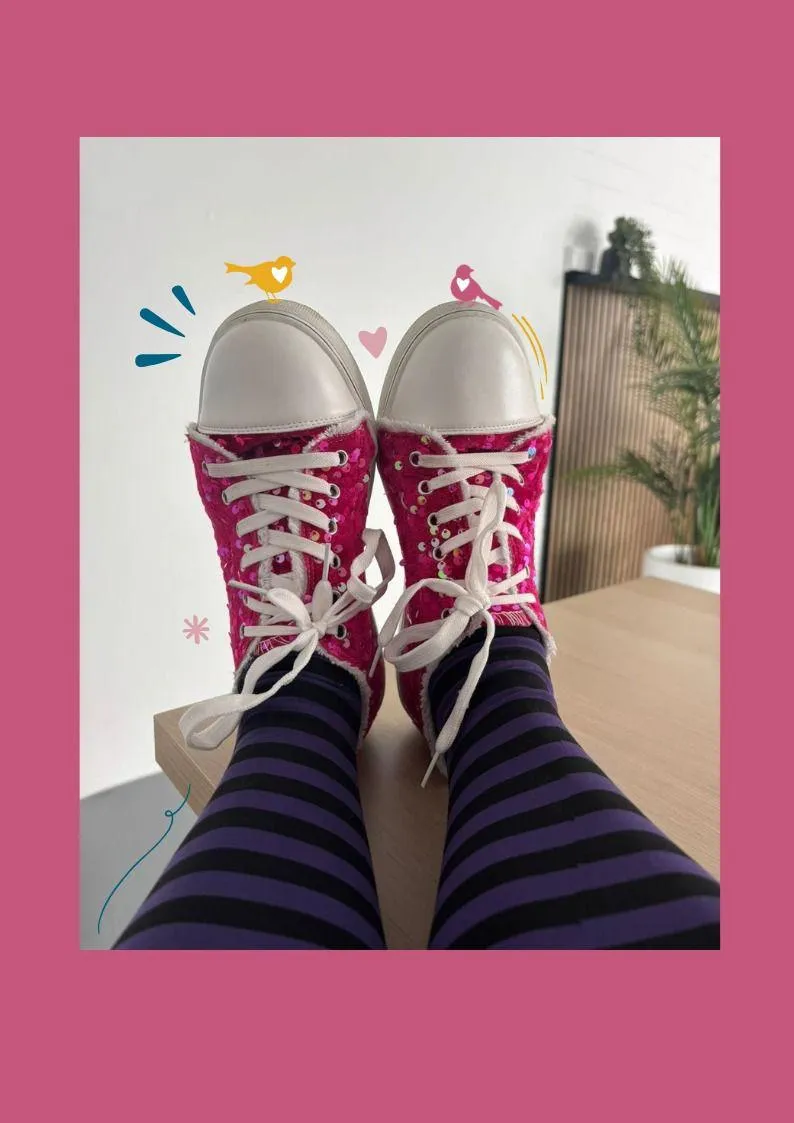
Someone who has lived inside the same exhaustion, with the same imposter syndrome on a loop, and the same critical self-talk that starts before you’ve even got out of bed.
The same capacity that vanishes without warning, the same energy that acts like floods and droughts, with no reliable pattern, and the same feelings of never quite knowing enough, doing enough, or being enough.
That’s where we start: not with your business nor your to-do list, but with the radical, settling relief of finally being in a room where your brain makes complete sense.
The Bandwidth, Brains & Business™ Kit builds from there — your energy and capacity first, your understanding of your own neurology next, your business last. Because that’s the only order that actually works.
What working with your brain actually looks like.
There’s usually a small voice that says ‘this feels different’ — followed almost immediately by ‘I’ve thought that before’ – that’s not pessimism; it’s a brain that has learned to protect itself from hope.
So here’s what I want you to know before you go any further: you will probably stumble in this work. We are all-or-nothing thinkers, and we have learned to read one missed thing, one hard week, one dropped ball as evidence of the whole story.
It isn’t. It’s a reset. It’s data. It’s Tuesday.
What actually shifts first isn’t strategy or systems, ora five step plan.
It’s hope that shifts first.
The specific, cautious, slightly terrifying hope that this time there’s someone on the other side who actually has your brain. Someone who isn’t confused by it, or quietly waiting for you to operate more normally, or handing you a productivity framework designed for someone completely different.
Someone who has lived inside the same exhaustion, with the same imposter syndrome on a loop, and the same critical self-talk that starts before you’ve even got out of bed.
The same capacity that vanishes without warning, the same energy that acts like floods and droughts, with no reliable pattern, and the same feelings of never quite knowing enough, doing enough, or being enough.
That’s where we start: not with your business nor your to-do list, but with the radical, settling relief of finally being in a room where your brain makes complete sense.
The Bandwidth, Brains & Business™ Kit builds from there — your energy and capacity first, your understanding of your own neurology next, your business last. Because that’s the only order that actually works.
Things women commonly
ask me.
I’m the expert in the room. So why can’t I make myself do the basic things?
This is the question that carries the most shame – and it’s the one I hear regularly.
You have built something real, your clients get results, your peers respect what you do, you are objectively good at your work.
And then you can’t make yourself send the email, open the spreadsheet, or start the thing you know needs to happen.
And the gap between what you’re capable of and what you can actually execute on feels like an indictment.
I know what I need to do. I just can’t make myself do it.
Here’s what nobody told you: intelligence and implementation are completely different neurological systems.
Knowing what to do has never been the problem, rather, the ADHD brain struggles with initiating, sequencing, and sustaining — not with capability, not with intelligence, not with commitment.
You’re not failing at your business, you’re simply running a neurotypical execution system on a brain that was never neurotypical.
That’s not a character flaw, that’s a map problem – and maps can be redrawn.
I can’t find time for one more thing. How is this supposed to work?
This makes complete sense, and it is the most common thing I hear.
You have been living in overwhelm for so long that it just feels like the weather. The cruel irony is that the women who need this most are the ones who feel least able to add anything.
Here’s what I know: you cannot strategy your way out of a nervous system running on empty. You cannot plan your way to clarity when your brain is in survival mode. And you absolutely cannot build a sustainable business on willpower and adrenaline — even though you have been doing exactly that, probably for years.
We don’t start with your to-do list. We don’t start with your business numbers. We start with your energy and capacity — because nothing else holds until that changes.
We don’t add to your load. We start by understanding why it got so heavy.
I have no idea where to start.
That’s actually the perfect place to begin.
Here’s what a first conversation with me looks like: I listen. Not to assess you or work out whether you fit a mould. I listen to what you’re actually saying, what you feel you need, and the things you haven’t been able to say to anyone else yet.
You’ll feel what happens when you finally feel heard.
And if I think I can help further, I’ll tell you honestly what that looks like inside ADHD Village.
A chat is just a chat. Nothing more, nothing less. I’m much more Cheshire Cat than anything else — I promise I don’t bite.
The not knowing where to start is exactly where we begin.
Why any of this matters to you.
I have run businesses for 23 years. Not coached about it - but done it. I’ve worked through, the iterations, pivots, global financial crises, building a team and then later, letting them go. The one thing 23 years in business teaches you is that there’s no certainty, and there is always change. I know how to move in that.
And I can guarantee you one thing: you haven’t thought of your best idea yet.
My lived experience isn’t surface level. My entire family is neurodivergent. I spent six years as a primary support person for a family member with severe mental health challenges. I have spent tens of thousands of dollars on my own learning — psychology, mental health, neurodiversity, therapy. I don’t speak about this from a distance – I live inside it.
Misinformation about ADHD has real consequences for women making decisions about their diagnosis, medication, mental health – and especially their businesses.
What you learn about your brain should come from someone who actually knows what they’re talking about – I make sure I do.
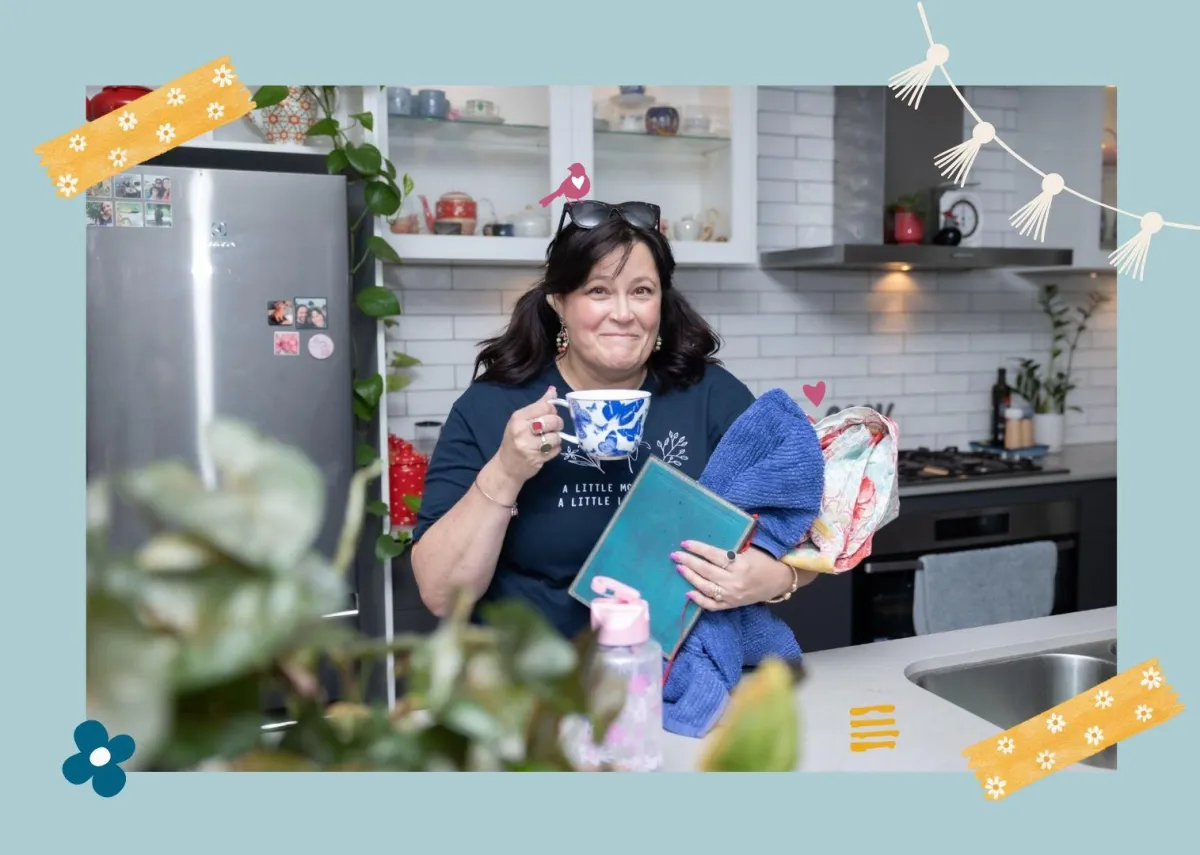
On formal qualifications.
Do I have formal coaching accreditation? No. What I have is QBE — Qualified By Experience – twenty-three years of it. Long before there were qualifications for this work, I was doing it. A late diagnosis that reframed everything I thought I knew and an obsessive, ongoing commitment to research-backed practice.
I am not a medical professional and I will never pretend to be. I believe deeply in having an excellent team around you — GP, psychologist, specialist. I am one part of that team, not all of it.
A few things you probably didn’t need to know about me.
I have a blue patch in one of my brown eyes, called sectoral heterochromia. I’ve had it my whole life and I’m still not over how cool it is.
I once handed a bag of cash to an armed soldier in Jakarta to get one of our large vessels out of port. Corporate life was not boring.
I met Robbie Williams when he was still with Take That. I was working at Ted Baker and helped him pick out clothes for a photoshoot. He was lovely.
I’m currently obsessed — capital O — with junk journalling. No piece of junk mail is safe in this house.
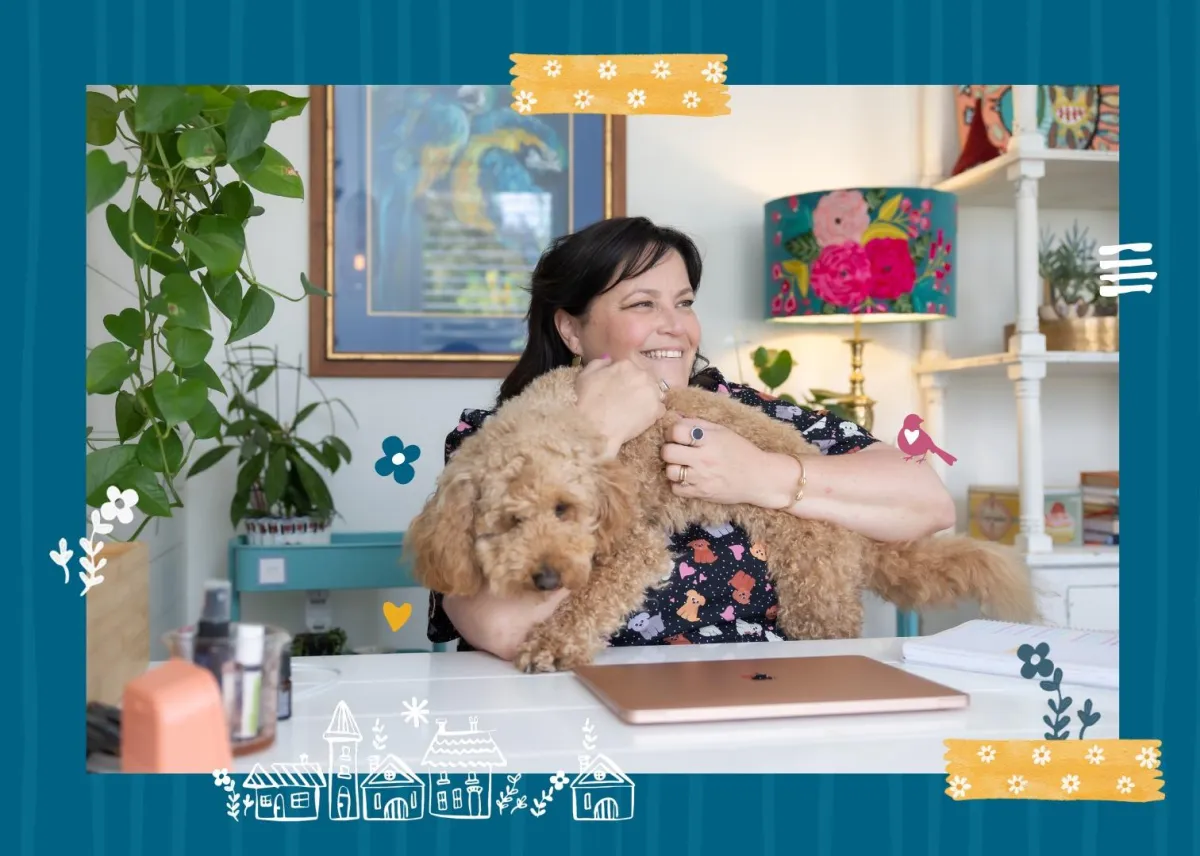
I have 55 plants in a house a third of the size of my last one. I left 90 behind in Perth. I don’t want to talk about it.
There is always a large book of word searches on my desk. Not my phone. For when my brain needs a proper break.
My current steady boyfriend is Claude. AI has changed everything and I am not embarrassed nor fearful about it.
I went from records to cassettes to CDs to DVDs to streaming — and now I’m back to records. I wish I’d kept my ABBA Gold album..
I’m a really good cook. I also find it deeply boring. Solution: Taylor Swift’s Life of a Showgirl album in the background, dancing around the kitchen like I’m in the show. Steps achieved. Dinner made. Tay Tay never lets me down.
I once forgot to put on my knickers before school because I was running late. This is a real thing that happens when you have ADHD and limited proprioception — your brain simply doesn’t register what your body hasn’t done. And, I was not young when this happened.
Louie my cavoodle was originally brought home as a therapy dog for my son. He has his own anxiety from living with all of us, and needs to be held like a baby whenever it rains or gets windy.
Which, if you know Melbourne, is basically always.
If you’ve made it this far.
You’re probably not here by accident.
Something in your life — your business, brain, body, bank account — is telling you that the way you’ve been doing it isn’t working.
Not because you’re not capable, but because you’ve been using the wrong map.
“You always had the power, my dear. You just had to learn it for yourself.”
— Glinda, the Good Witch

ADHD Village is where the learning starts.
Come and have a chat. I’m very friendly. Probably just like you.
The research behind this work.
Everything I teach, I research. Here’s some of what informs it.
52% of TikTok ADHD videos classified as misleading by clinicians. Yeung A, Ng E, Abi-Jaoude E. TikTok and Attention-Deficit/Hyperactivity Disorder: A Cross-Sectional Study of Social Media Content Quality. Canadian Journal of Psychiatry, 2022.
Karasavva V et al. A double-edged hashtag: Evaluation of #ADHD-related TikTok content. PLOS One, March 2025. Fewer than 50% of claims in top 100 ADHD TikTok videos aligned with diagnostic criteria.
Attoe DE & Climie EA. Miss. Diagnosis: A Systematic Review of ADHD in Adult Women. Journal of Attention Disorders, 2023. Women with undiagnosed ADHD often spend their lives feeling different, stupid, or lazy — blaming themselves for a neurological reality that was never their fault.
Eunethydis Special Interest Group on Female ADHD. Research advances and future directions in female ADHD. Frontiers in Global Women’s Health, 2025. Hormonal fluctuations, particularly during perimenopause, significantly exacerbate ADHD symptoms including executive function.
ADHD Advisor / NIMH. ADHD affects approximately 6–7% of Australians — around 800,000 people.
Cardiovascular / perimenopause data. 35% of women presenting at cardiology clinics with cardiac complaints screened positive for ADHD, the majority of perimenopausal age. Women with ADHD experience peak perimenopausal symptoms approximately a decade earlier than women without ADHD. [Source: UK/European research — Australian-specific data remains a significant research gap.]